
Where to Start When Your HR Processes Feel Reactive
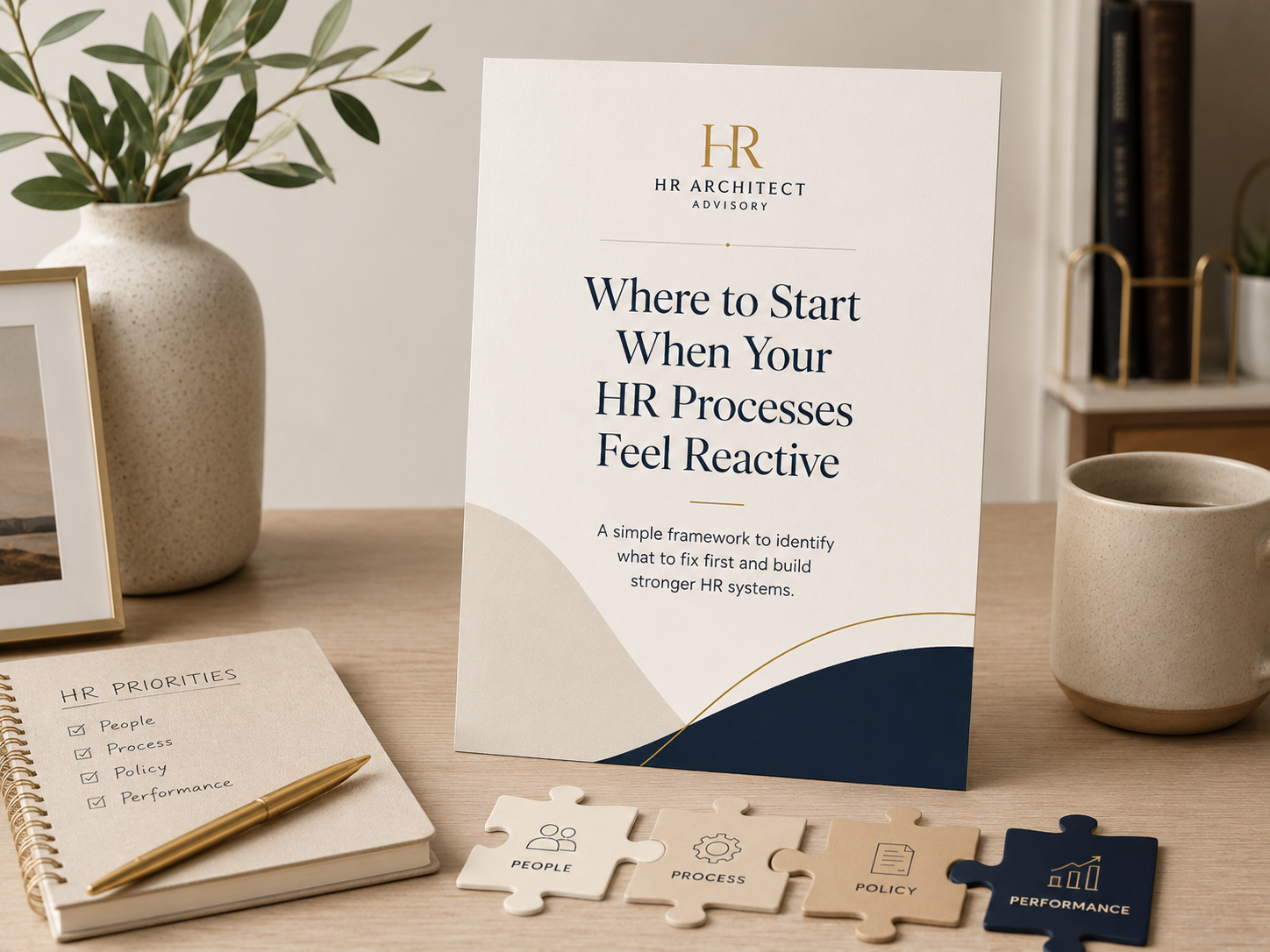
Most HR teams are not short on effort. They are short on structure.
The work is constant: leave requests, manager questions, employee relations issues, onboarding needs, policy updates, hiring conversations, compliance deadlines, training requests, and the never-ending HR inbox.
When the process lives in someone’s head, on sticky notes, in scattered emails, or in “we usually do it this way” habits, HR becomes reactive fast.
That is where small process gaps turn into bigger issues.
A manager asks the wrong question.
A leave case misses a deadline.
A workplace concern is handled inconsistently.
An interview panel evaluates candidates differently.
A project gets delayed because no one knows the next step.
An employee request sits in the inbox longer than it should.
The goal is not to over-process everything. The goal is to make the most important HR work easier to repeat, document, and explain.
Start with the process creating the most risk or inconsistency
If everything feels urgent, start with the area causing the most confusion, risk, or repeat questions.
If leave requests feel messy
Start with your leave of absence process.
Leave administration gets complicated because it often overlaps with medical information, disability accommodation, pregnancy, family care, wage replacement, benefits, return-to-work, and manager communication.
If managers are unsure what they can ask, if HR is tracking leave manually, or if employees are receiving inconsistent communication, this is a high-priority area to structure.
Start with:
A leave intake process
A packet or workflow selector
Manager communication boundaries
A tracker for deadlines and follow-up
Return-to-work documentation
Escalation guidance for accommodation or legal review
If compliance documentation feels inconsistent
Start with the processes that require documentation.
This may include workplace violence prevention, employee complaints, policy acknowledgments, training records, ergonomic requests, leave cases, or performance documentation.
The question is simple: if someone asked how the company handled this, could you show the process?
If the answer is no, build the documentation path first.
If managers keep asking the same questions
Start with manager enablement.
Managers do not need to become HR experts, but they do need clear boundaries and practical scripts.
They need to know:
What to say
What not to ask
When to call HR
What to document
What decisions they should not make alone
Manager tools are especially helpful for interviews, 1:1 meetings, leave conversations, ergonomic concerns, performance conversations, and employee relations issues.
If the HR inbox is overwhelming
Start with intake and ownership.
A messy HR inbox is usually not just an email problem. It is a process problem.
Common issues include:
No clear owner
No response-time expectation
No category system
No triage method
No way to see what is pending
No escalation path
No consistent closure process
You do not always need a ticketing system. Outlook, Gmail, shared inboxes, folders, rules, labels, and trackers can work if the process is clear.
If projects keep living on sticky notes
Start with a project tracker.
Sticky notes are not the problem. They are often the first place good ideas and urgent reminders show up.
The problem is when sticky notes never become projects with owners, next actions, due dates, blockers, and decisions needed.
A simple tracker helps HR teams turn scattered work into visible priorities.
Build systems that are practical enough to use
The best HR tools are not the most complicated. They are the ones people actually use.
A strong HR process should answer:
What triggers this process?
Who owns the next step?
What template or form should be used?
What should managers know?
What should remain confidential?
What needs to be documented?
When should HR escalate?
How do we close the loop?
That is the difference between a template and an operating system.
Start small, but start somewhere
You do not need to rebuild every HR process at once.
Choose one area where your team is spending too much time, carrying too much risk, or answering the same questions repeatedly.
Then build the structure around it.
That may be a checklist, a tracker, a manager guide, an email template, a training deck, or a full toolkit.
The point is not perfection. The point is consistency.
Need help building your HR infrastructure?
HR Architect Advisory helps employers build practical HR systems, manager tools, compliance workflows, employee communication templates, and people operations processes that are easier to use, document, and scale.
Explore the HR Toolkit library or reach out for advisory support if you need help customizing a process for your organization.