
2-Minute Icebreakers That Don't Feel Awkward
You know the moment.
The facilitator says "let's go around and share a fun fact about yourself" — and the energy in the room drops immediately. People glance at their phones. Someone makes a joke to deflect. The meeting hasn't started and it's already off.
That is what a bad icebreaker does. It signals that the next hour might also be a waste of time.
But the problem isn't icebreakers. The problem is the wrong icebreaker for the wrong moment.
A good opening prompt takes two minutes, asks nothing too personal, and actually connects to why people are in the room. It helps people arrive, settle, and get ready to participate — without performing enthusiasm they don't feel.
That's a different tool entirely.
Why icebreakers often fail
Most icebreakers fall flat because they ask for something the group hasn't built trust for yet.
Fun facts. Superpowers. Desert island picks. These prompts work fine in some settings and land horribly in others. The issue isn't the format — it's the mismatch between what the prompt asks and what the room is ready to give.
A better approach starts with reading what the meeting actually needs, then choosing the opener from there.
What makes a good 2-minute icebreaker
A strong icebreaker should be:
Easy to answer
Low-risk
Relevant to the meeting
Short enough to keep momentum
Flexible for remote, hybrid, or in-person groups
Useful for the facilitator
The goal is not entertainment. The goal is connection and readiness.
Use the icebreaker to match the moment
Different meetings need different openings.
A team meeting may need energy. A project meeting may need focus. A tense meeting may need a reset. A remote meeting may need participation. A brainstorming session may need creativity.
The best facilitators choose the opener based on what the room needs — not what they always do.
Examples of simple 2-minute icebreakers
Expectation Reset
Ask: "What would make this meeting a good use of your time?"
This works because it immediately surfaces priorities and helps the facilitator understand what people need from the conversation.
One-Word Check-In
Ask: "What is one word for how you are arriving today?"
This gives people a quick way to signal energy, focus, or capacity without overexplaining.
What's True for Me
Share a simple statement and invite others to raise a hand, react, or respond if it is also true for them.
Examples:
"I work better when I know the goal upfront."
"I like having time to think before responding."
"I am balancing a lot today."
"I prefer clear next steps before leaving a meeting."
This helps people find common ground without forcing personal disclosure.
Chat-First Response
For remote meetings, ask participants to respond in the chat before speaking.
Examples:
"What is one thing you want clarity on today?"
"What is one word that describes the current project status?"
"What is one blocker we should not ignore?"
This helps quieter participants engage before the conversation is shaped by the fastest speakers.
4-Square Breathing Reset
For tense, rushed, or overloaded groups, take 60 seconds to reset before diving in.
Invite participants to inhale, hold, exhale, and pause for an equal count. Repeat two or three times.
This is not about turning the meeting into a wellness session. It is about helping people arrive before jumping into decisions. Frame it as a quick reset and model it yourself — that makes it easier for others to follow.
When to skip the icebreaker
Not every meeting needs one.
Skip the icebreaker if:
There is an urgent issue
The group is already engaged
The prompt would feel performative
The meeting is too short
The team has not built enough trust for the question being asked
A good facilitator knows when to open with connection and when to get directly to the work.
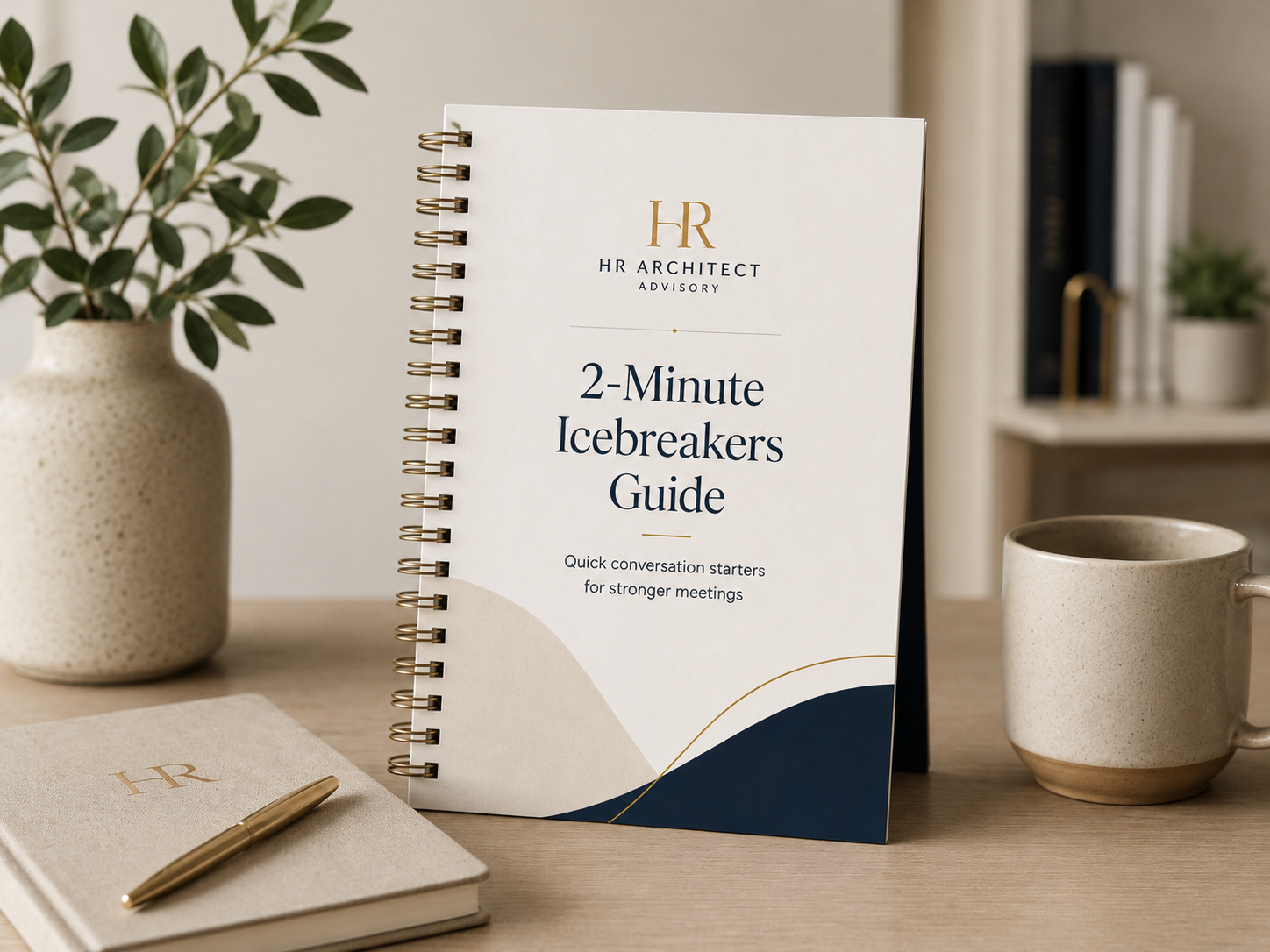
Download the 2-Minute Icebreakers Guide
The 2-Minute Icebreakers Guide includes quick, low-pressure meeting openers that help teams connect, reset, and participate without forced energy or awkwardness.
Use it for team meetings, manager meetings, workshops, trainings, remote sessions, and project conversations.
Need help improving your meetings or manager tools?
HR Architect Advisory helps organizations build practical manager enablement tools, meeting structures, facilitation guides, and employee communication resources that make workplace conversations more effective and easier to lead.